






The House rejected legislation Thursday to advance construction of the Smithsonian American Women’s History Museum after a partisan battle broke out in recent days over the long-sought building.
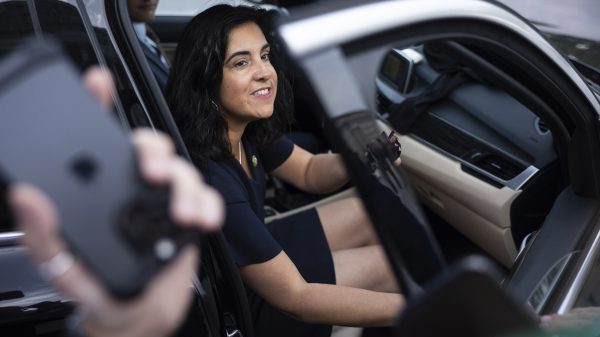
Lawmakers voted 216-204 to reject the legislation led by Rep. Nicole Malliotakis (R-N.Y.). Six Republican hard-liners joined all Democrats in opposition.
While 127 Democrats cosponsored an earlier version of the bill, most of them bailed after Republicans altered it ahead of the floor vote.
New language added in the House Administration Committee last month dedicated the museum to “preserving, researching, and presenting the history, achievements, and lived experiences of biological women in the United States” and prohibited the institution from seeking to “identify, present, describe, or otherwise depict any biological male as a female.”
Other new provisions called for “an equal representation of the diversity of the political viewpoints and authentic experiences held by women in the United States” and gave President Donald Trump the unilateral power to relocate the museum from sites already identified on the National Mall.
The Democratic Women’s Caucus announced earlier this week it would oppose the altered bill after working on it with Republicans for years.
“They amended the bill to give Trump and his allies unregulated power over what content and which women can be included in the museum, and the museum’s location,” Democratic Reps. Teresa Leger Fernández (N.M.), Hillary Scholten (Mich.) and Emilia Sykes (Ohio) said in a statement. “A museum about women, fought for and supported by women, should not be controlled by one man.”
Republicans also dealt with their own internal fights over the legislation this week. Several GOP lawmakers raised concerns in House Republicans’ closed door meeting Wednesday morning about why the museum was needed.
They also argued it would further divide Americans into groups when there are already women represented across the wider collection of Smithsonian museums, according to five people in the room granted anonymity to describe the private discussion.