










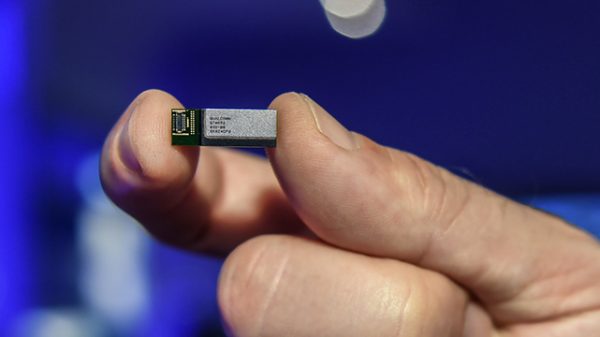





KORE says it will introduce an SGP.32-compliant connectivity portfolio in partnership with eSIM specialist Kigen, aiming to make it easier for enterprises to provision, switch and localize cellular IoT connectivity across global device fleets.
Global IoT deployments have a familiar weak point: connectivity decisions made at manufacturing time often age badly. Devices move, networks change, regulations evolve, and the operational cost of physically touching endpoints—whether that’s swapping SIMs or dispatching technicians—quickly becomes a line item that overshadows the sensor itself.
Against that backdrop, KORE has announced a new portfolio of connectivity solutions aligned with the GSMA’s SGP.32 eSIM standard, developed in partnership with Kigen. KORE says commercial availability is planned for later in 2026, positioning the offering for enterprises that want the benefits of remote provisioning without being locked into first-generation IoT eSIM approaches.
The core of the announcement is straightforward: KORE plans to deliver SGP.32-compliant connectivity options that can be adapted over a device’s lifetime. Kigen, for its part, is contributing what it describes as a secure, GSMA-certified SGP.32 eSIM and eIM technology to underpin the solution’s architecture.
Why SGP.32 matters—and why this isn’t just another “eSIM-ready” claim
Many connectivity announcements still treat eSIM as a checkbox: “remote provisioning” becomes a vague promise, with few specifics on how enterprises will actually operate fleets at scale. What makes this KORE-Kigen news distinct is the explicit focus on SGP.32 as the organizing principle for an enterprise portfolio—combined with an emphasis on operational models such as streamlined roaming, multi-network resiliency, and local connectivity with failover and recovery.
In other words, the story here isn’t merely that the SIM can be provisioned remotely. It is that KORE is packaging connectivity behavior—roaming, localization, and resiliency patterns—as selectable profiles intended to match different deployment realities, from stationary assets to mobile ones. That framing aligns with what large deployments tend to ask for: repeatable templates that can be applied across products, geographies, and contract cycles.
Programmable connectivity shifts the burden from hardware logistics to lifecycle operations
KORE is also using this announcement to reinforce a longer-term direction: a “unified eSIM-based platform” and what it calls programmable connectivity. Even without additional technical detail, the implication for IoT operations teams is concrete: if connectivity can be switched and optimized over time, procurement and device lifecycle management become more software-driven and less dependent on physical intervention.
That matters because the biggest pain in global IoT isn’t typically initial activation—it’s change management. When a fleet needs to adapt to a new network partner, a new coverage footprint, or a shift in local requirements, the cost is rarely the new connectivity plan alone; it’s the coordination across manufacturing, field operations, and support. KORE is explicitly positioning SGP.32 as a way to reduce those “truck roll” scenarios by making changes remotely.
Interoperability and carrier-grade integrations are the real gating factors
The announcement leans on interoperability and “carrier-grade integrations,” and this is where SGP.32 success will be won or lost for many enterprises. Standards remove some friction, but they don’t eliminate integration work across connectivity providers, provisioning infrastructure, and the enterprise’s own device management stack.
A practical insight derived from KORE’s positioning: by centering “deep carrier relationships” and global infrastructure, KORE is implicitly acknowledging that SGP.32 on its own is not the endgame. Enterprises will judge these offerings by how smoothly profile management, switching logic, and recovery workflows translate into day-two operations—especially when devices are deployed across multiple countries and connectivity must be localized.
What OEMs, integrators, and enterprises should take from the announcement
For OEMs, an SGP.32-aligned portfolio could reduce the pressure to region-split hardware SKUs purely for connectivity reasons, assuming the provisioning and profile strategy is robust enough to handle localization requirements. It may also change how OEMs negotiate connectivity: the commercial relationship can become more dynamic over a device’s service life, rather than fixed at shipment.
For system integrators, the opportunity—and the work—will likely sit in stitching provisioning workflows into existing enterprise tooling. Remote provisioning is most valuable when it is operationalized: linked to device state, policy rules, and exception handling, rather than treated as a standalone portal activity.
For connectivity providers in the ecosystem, KORE’s move underscores a broader trend: enterprises increasingly expect connectivity to behave like a software layer, with policy-driven selection and resilience options. That expectation tends to raise the bar on orchestration, lifecycle visibility, and multi-network operating models.
Broader industry relevance is clear: as the GSMA’s IoT-focused eSIM standards mature, the differentiator shifts from “supports eSIM” to “can you run a global fleet through years of network, regulatory and commercial change without operational disruption?” KORE and Kigen are betting that SGP.32, delivered as an enterprise-ready portfolio rather than a point capability, is the next step in answering that question.
The post KORE teams with Kigen on SGP.32 eSIM to simplify global IoT provisioning appeared first on IoT Business News.