








Bipartisan congressional pressure helped push Mexico’s legislature to approve a joint military exercise between the U.S. and Mexican militaries, according to two people familiar with a U.S. delegation to the country.
The U.S. and Mexico had been considering a joint exercise for which 19 U.S. Marines would train with the Mexican Navy in the city of Campeche along the Gulf of Mexico (the U.S. calls it the “Gulf of America”). But Mexican lawmakers balked at approving the exercise after the U.S. conducted a Jan. 3 operation to capture former Venezuelan leader Nicolás Maduro.
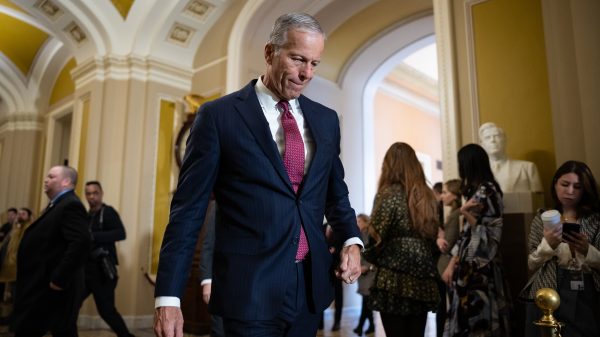
The plan got back on track following a visit from a congressional delegation led by Rep. Michael McCaul (R-Texas), according to two people familiar with the visit who were granted anonymity to discuss sensitive conversations. U.S. lawmakers raised the issue with their counterparts in the Mexican Senate, urging them to approve the exercise and telling Mexican lawmakers they would closely track the matter, the people said.
Mexican President Claudia Sheinbaum officially requested the Marines’ entry earlier this week for the exercises, which will run from Feb. 15 to April 16. The nudge from Congress apparently helped, and Mexico’s Senate unanimously approved the Marines’ entry on Wednesday.
The involvement of the congressional delegation in securing the approval of the exercise has not been previously reported.
McCaul, who chairs the Mexico-United States Interparliamentary Group, and Rep. Henry Cuellar of Texas, the top Democrat for the group, said in a joint statement that they “welcome the approval” and said it was a “key objective of our bipartisan delegation to Mexico this past weekend.”
“We are grateful for the Mexican Senate’s commitment to shared security, which will enable our countries to enhance intelligence-sharing and naval capabilities, intercept dangerous shipments before they reach our shores, and better protect communities on both sides of the border,” McCaul and Cuellar said.
U.S. Ambassador to Mexico Ronald Johnson said in his own statement that the delegation “in its meetings with Mexican authorities and Senate counterparts, reflects the profound depth of our bilateral cooperation.” He added it was also part of the embassy’s round-the-clock efforts “to work alongside the Government of Mexico and deliver greater security and prosperity for the American and Mexican peoples.”
At least in this case, the episode underscores that lawmakers still have some ability to sway foreign policy.
And the approval of the exercise comes at a critical juncture for the bilateral security relationship between Mexico City and Washington. President Donald Trump has previously warned he might consider using military force against Mexico’s drug cartels in the name of combating fentanyl trafficking.
Meanwhile, drug cartels, which control an increasing amount of territory in Mexico, have continued to expand their technological capabilities. On Wednesday, the U.S. abruptly closed the airspace around El Paso International Airport, saying that a Mexican cartel’s drone had breached U.S. airspace and counter-drone operations around the airport could have endangered commercial flights.