












Congress is back. Welcome to the December of Hellth.
Lawmakers now have a mere 30 days to address expiring Obamacare tax credits and prevent health insurance hikes for millions of Americans. Republicans and Democrats agree success hangs on one question: Will President Donald Trump figure out what he wants?
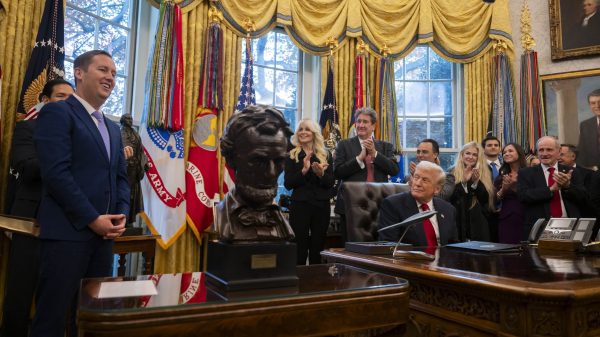
Interpreting Trump’s intentions has gotten tougher since lawmakers left Washington. Early in the break, Trump appeared to be on the brink of announcing a framework to extend the Affordable Care Act subsidies with new eligibility restrictions, only to pull back after GOP criticism. He then said he doesn’t want to extend the subsidies but understands it might be necessary.
Capitol Hill factions are trying to figure out what Trump wants and how to entice him to their side.
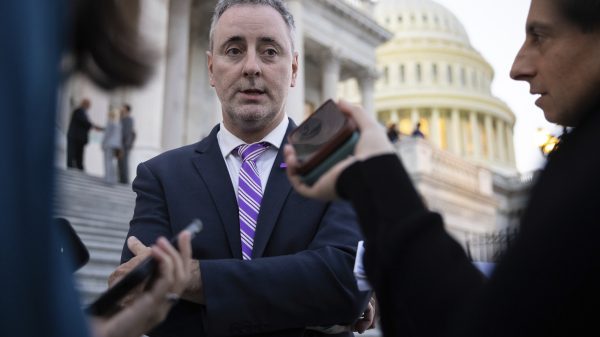
“The president has got to sign whatever we do, otherwise it’s a legislative exercise,” says Rep. Brian Fitzpatrick, the Pennsylvania Republican who is drafting what he describes as a bipartisan proposal that would largely align with last week’s leaked White House framework.
The timeline as we know it — Though the ACA tax credits expire at month’s end, some lawmakers are looking at Jan. 30, the next shutdown deadline, as the real cutoff for a health care deal.
The Senate will vote as soon as Dec. 9 on an undefined health care proposal, the fulfillment of the bipartisan deal to reopen the government.
What’s in the works — Fitzpatrick and other centrists are looking to build bipartisan support for an extension of the subsidies with new income restrictions and other safeguards. Their efforts have loose backing from the Republican Main Street Caucus, whose chair Rep. Mike Flood (Neb.) endorsed the contours of the leaked White House health plan.
A coalition of House and Senate Republicans that includes key committee chairs are working behind the scenes on a range of possible proposals, but there’s no guarantee the GOP will fall in line or the lawmakers will produce a bill this year.
Senate Finance Chair Mike Crapo (R-Idaho) says he is “working to try to find a pathway to get some bipartisan solution” — not a budget reconciliation bill.
As a fail-safe, centrist House Republicans are prepared to launch a discharge petition to force a floor vote on a subsidy extension. But they’re also trying to give space to the Senate to see if a bipartisan deal can be reached.
Democrats have yet to reach a consensus.
A group of Democrats including Sen. Jeanne Shaheen (N.H.) and Rep. Tom Suozzi (N.Y.) has been in close contact with Republicans including Fitzpatrick and Sen. Lisa Murkowski (Alaska) about what could get bipartisan support. But others, including independent Sen. Bernie Sanders of Vermont, want Democrats to embrace a sweeping health care plan that could be a rallying cry for the midterms but has no chance of winning GOP votes.
There’s widespread skepticism that Republicans will agree to any plan that isn’t fully endorsed by Trump. A significant swath of GOP lawmakers will simply never vote to extend anything related to Obamacare, according to three GOP aides granted anonymity to discuss internal dynamics.
“That’s the trouble today,” says Sen. Chris Murphy (D-Conn.). “You can have good-faith negotiations with Republicans, but it just doesn’t matter until Donald Trump weighs in.”
What else we’re watching:
— What’s next for appropriations: House GOP appropriators aren’t yet ready to advance the two biggest outstanding funding bills — Defense and Labor-HHS-Education — and are instead rooting for a cross-chamber compromise on several smaller funding measures, with sights on enactment by month’s end.
Senate Republicans are also looking for a smaller group of bills that could get signed into law as they continue to pursue a separate minibus that would pair defense funding with Labor-HHS-Education and other bills, according to two aides granted anonymity to disclose internal deliberations.
Any appropriations bills finalized in the next three weeks would be ripe for hitching to a year-end agreement on health insurance subsidies, should one materialize.
— NDAA deal incoming: Lawmakers plan to release the final text of a compromise version of the National Defense Authorization Act this week and tee up a House floor vote as soon as next week, though House and Senate leaders still need to sign off on the final product.
Jordain Carney, Jennifer Scholtes, Katherine Tully-McManus and Connor O’Brien contributed to this report.