










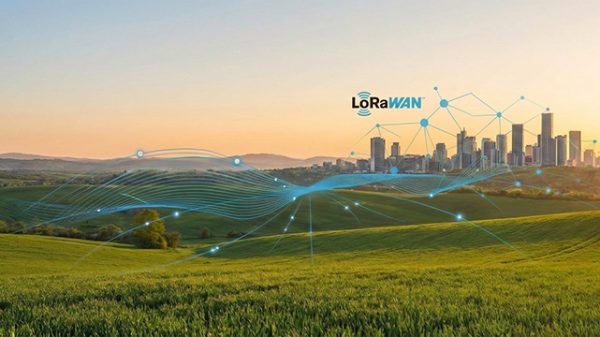



The rapid expansion of connected devices has created a growing demand for communication technologies capable of supporting large-scale, low-power deployments. Many IoT applications require sensors to operate for years on batteries while transmitting small amounts of data across wide geographic areas. This need has driven the development of Low Power Wide Area Network (LPWAN) technologies, among which LoRaWAN has emerged as one of the most widely adopted.
Used in smart cities, industrial monitoring, environmental sensing and asset tracking, LoRaWAN provides a long-range, energy-efficient networking approach designed specifically for IoT devices. Understanding how LoRaWAN works, its architectural model, and its ecosystem is essential for organizations planning large-scale connected deployments.
Key Takeaways
- LoRaWAN is a Low Power Wide Area Network protocol designed for long-range communication between battery-powered IoT devices and cloud applications.
- The architecture relies on a star-of-stars topology where gateways relay messages between end devices and network servers.
- LoRaWAN operates in unlicensed spectrum, enabling public, private and hybrid network deployments.
- The technology is optimized for small data packets, long battery life and large-scale sensor deployments.
- While highly efficient for many IoT scenarios, LoRaWAN has limitations in bandwidth, latency and downlink capacity.
What is LoRaWAN: Architecture, Use Cases and Ecosystem Overview?
LoRaWAN is an open networking protocol designed for wireless communication between low-power devices and internet-connected applications over long distances. It is built specifically for Internet of Things deployments where sensors or devices must transmit small amounts of data while operating on minimal power for extended periods.
The protocol sits on top of the LoRa physical radio modulation layer, which enables long-range communication using spread spectrum techniques. Together, the radio technology and the networking protocol allow devices to communicate across distances ranging from several kilometers in urban environments to more than ten kilometers in rural areas.
Unlike traditional cellular connectivity, LoRaWAN networks are optimized for intermittent data transmissions rather than continuous communication. This design allows devices such as environmental sensors, smart meters or tracking devices to operate for years on a single battery.
In the broader IoT connectivity landscape, LoRaWAN belongs to the LPWAN category alongside technologies such as NB-IoT and Sigfox. However, its open specification and flexible deployment models have contributed to a large ecosystem of device makers, network operators and solution providers.
How LoRaWAN works
The LoRaWAN architecture follows a star-of-stars topology designed to support large numbers of devices while minimizing complexity at the edge of the network.
In this architecture, end devices communicate directly with gateways using LoRa radio signals. These gateways act as transparent bridges that forward messages to centralized network servers over IP networks.
The main architectural components include:
- End devices – Sensors or actuators equipped with LoRa radios that collect or transmit data.
- Gateways – Infrastructure elements that receive radio messages from devices and relay them to the network server.
- Network server – The core intelligence of the network responsible for device authentication, message routing and network management.
- Application server – The backend platform where device data is processed, stored and integrated with enterprise applications.
When a device transmits data, the radio signal may be received by multiple gateways simultaneously. Each gateway forwards the packet to the network server, which deduplicates messages and determines the optimal gateway for downlink responses.
This architecture simplifies device design because end nodes do not need to maintain complex network associations. They simply transmit data packets that are captured by nearby gateways.
LoRaWAN devices are also categorized into three operational classes:
- Class A – The most energy-efficient mode where devices open receive windows only after transmitting data.
- Class B – Adds scheduled receive slots synchronized with network beacons.
- Class C – Keeps devices in near-continuous listening mode for applications requiring lower latency.
These operational modes allow LoRaWAN networks to support a wide variety of IoT use cases with different power and latency requirements.
Key technologies and standards
LoRaWAN relies on a combination of radio technologies, networking protocols and security mechanisms that together enable reliable IoT connectivity.
Key technical components include:
- LoRa modulation – A chirp spread spectrum radio technique designed to maximize communication range while maintaining low power consumption.
- Adaptive Data Rate (ADR) – A mechanism that dynamically adjusts transmission parameters to optimize network capacity and battery life.
- End-to-end encryption – LoRaWAN uses AES-128 encryption to secure communications between devices and applications.
- Device activation methods – Devices can join networks using Over-The-Air Activation (OTAA) or Activation by Personalization (ABP).
- Regional frequency plans – LoRaWAN operates in unlicensed spectrum bands that vary by geographic region.
The protocol itself is maintained through an open specification managed by industry stakeholders. This has allowed the ecosystem to evolve with standardized device behavior, security models and network interoperability.
Because LoRaWAN uses unlicensed spectrum, organizations can deploy their own private networks without relying on telecom operators. At the same time, large-scale public networks operated by connectivity providers are also available in many regions.
Main IoT use cases
LoRaWAN is particularly suited to IoT scenarios where devices must operate over long distances while sending small and infrequent data messages. As a result, it has been adopted across a wide range of sectors.
Smart cities
Municipal deployments often use LoRaWAN for infrastructure monitoring. Applications include smart parking systems, streetlight management, waste collection optimization and environmental monitoring.
Industrial IoT
Industrial facilities use LoRaWAN to monitor equipment conditions, track assets and collect operational data across large sites such as factories, mines or ports.
Energy and utilities
Utilities deploy LoRaWAN for smart metering, grid monitoring and leak detection. The technology allows sensors to be placed across large geographic areas without complex infrastructure.
Logistics and asset tracking
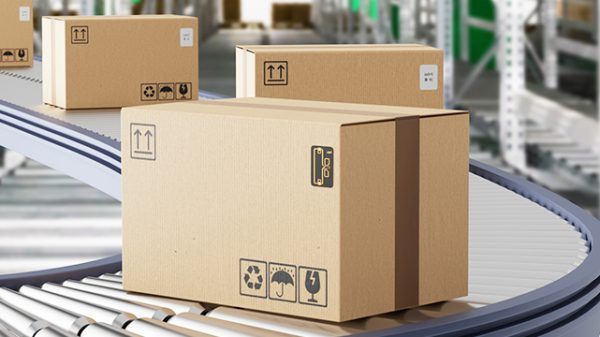
Tracking devices attached to pallets, containers or vehicles can periodically transmit location or status data through LoRaWAN networks.
Agriculture and environmental monitoring
In agriculture, sensors measuring soil moisture, temperature or irrigation conditions can transmit data across wide rural areas where traditional connectivity may be limited.
Building and campus management
Large commercial buildings or university campuses deploy LoRaWAN networks to monitor occupancy, indoor air quality, energy usage and facility conditions.
These use cases share a common requirement: large numbers of distributed sensors transmitting small data packets over long distances with minimal power consumption.
Benefits and limitations
LoRaWAN offers several advantages that make it attractive for many IoT deployments.
- Long communication range – Signals can travel several kilometers, reducing the need for dense infrastructure.
- Low power consumption – Devices can operate for years on batteries.
- Flexible deployment models – Networks can be public, private or hybrid.
- Scalability for large sensor fleets – The architecture supports thousands of devices per gateway.
- Open ecosystem – The protocol is supported by a wide range of hardware and software vendors.
However, LoRaWAN also presents certain constraints that organizations must consider.
- Limited bandwidth – Data rates are relatively low compared to cellular technologies.
- Duty cycle restrictions – Regulatory limits in unlicensed spectrum restrict transmission frequency.
- Latency considerations – Downlink communication may be delayed depending on device class.
- Not suitable for high data applications – Video, voice or firmware updates may require alternative connectivity.
As a result, LoRaWAN is most effective when used for applications that transmit small amounts of data periodically rather than continuous streams.
Market landscape and ecosystem
The LoRaWAN ecosystem has expanded significantly over the past decade, involving a diverse set of stakeholders across the IoT value chain.
Key participants include:
- Device manufacturers producing sensors, modules and gateways compatible with LoRaWAN networks.
- Connectivity providers operating regional or national LoRaWAN networks.
- System integrators designing and deploying end-to-end IoT solutions.
- Platform vendors offering network management and device management software.
- Enterprise adopters deploying private LoRaWAN networks within industrial sites or campuses.
This diversity of actors has contributed to the technology’s widespread adoption. Public networks in many countries provide wide-area coverage, while private networks allow enterprises to maintain control over their connectivity infrastructure.
The availability of open standards and interoperable hardware has also reduced barriers for organizations seeking to experiment with IoT deployments.
Future outlook
The role of LoRaWAN in the IoT connectivity landscape continues to evolve as organizations expand their use of connected sensors and edge devices.
Several trends are shaping its future development.
- Growth of private IoT networks as enterprises deploy dedicated infrastructure within industrial sites.
- Integration with cloud platforms to support data analytics and large-scale device management.
- Improved device management capabilities through evolving protocol specifications.
- Hybrid connectivity strategies combining LoRaWAN with cellular and satellite IoT networks.
- Expansion of smart city and environmental monitoring deployments.
As IoT deployments scale globally, technologies such as LoRaWAN will continue to play an important role in connecting distributed sensors and enabling data collection across large geographic areas.
Frequently Asked Questions
What is LoRaWAN used for?
LoRaWAN is primarily used for connecting low-power IoT devices that transmit small data packets over long distances. Common applications include smart metering, environmental monitoring, asset tracking and industrial sensor networks.
How far can LoRaWAN transmit?
Communication range varies depending on environment and infrastructure. In urban areas it typically reaches several kilometers, while rural deployments may extend beyond ten kilometers.
Is LoRaWAN a cellular technology?
No. LoRaWAN operates in unlicensed spectrum and does not require cellular infrastructure, although it can coexist with cellular IoT technologies in hybrid deployments.
Can organizations deploy their own LoRaWAN networks?
Yes. Because the technology uses unlicensed spectrum, enterprises and municipalities can deploy private LoRaWAN networks using their own gateways and network servers.
How secure is LoRaWAN?
The protocol includes built-in AES-128 encryption and device authentication mechanisms designed to secure communications between devices, network servers and application servers.
Related IoT topics
- LPWAN connectivity
- NB-IoT
- Edge computing for IoT
- IoT device management
- Smart city infrastructure
- Industrial IoT architectures
The post LoRaWAN: Architecture, Use Cases and Ecosystem Overview appeared first on IoT Business News.