











The House passed funding for the Department of Homeland Security Thursday by a narrow margin amid a Democratic uproar over President Donald Trump’s aggressive immigration enforcement agenda.
The 220-207 vote puts Congress on track to clear the last annual spending bills ahead of the Jan. 30 deadline, avoiding a partial government shutdown. The DHS measure funds the Coast Guard, ICE, CBP, FEMA, TSA and other agencies through the end of the current fiscal year on Sept. 30.
Lawmakers later voted 341-88 to pass a larger, more bipartisan measure funding the Pentagon and departments of Health and Human Services, Labor, Housing and Urban Development, Transportation, and Education, also through Sept. 30.
It was a victory for House GOP leaders, who overcame attendance issues and concerns about the overall size of the spending package within their ranks. The chamber has now passed all 12 annual appropriations bills.
Democrats demanded a standalone vote on the DHS funding bill so that their caucus could voice their objection to the Trump administration’s harsh enforcement tactics — a concern that has been amplified by recent ICE and CBP operations in Minnesota.
The bills passed Thursday rejected many of the steep funding cuts to major domestic agencies that the Trump administration sought in the White House budget request earlier this year, but neither do they offer significant funding boosts. The Department of Housing and Urban Development would see a 9 percent boost over current funding levels, totaling $84.3 billion for HUD.
The Education Department would receive $79 billion, a slight increase of $217 million above current funding. The Department of Health and Human Services would be funded at nearly $117 billion, a $210 million increase, while the Department of Labor would get $13.7 billion, a $65 million hike.
As recently as Tuesday morning, it was not clear that the two parties would be able to strike a compromise on funding DHS.
“That was really negotiated right to the end,” Rep. Rosa DeLauro of Connecticut, the top Democratic appropriator in the House, told reporters. “And I believe that portion of the negotiation had to go to the White House, where you had Stephen Miller and somebody who was really making a determination on it.”
DeLauro was among the Democrats who voted against the bill, announcing on the floor that she had too many misgivings about the Trump administration’s immigration agenda. Only seven Democrats ended up voting for the bill; some argued that the negotiated bill was preferable to the alternatives — a stopgap measure that would give Trump a freer hand to run the department, or a shutdown that would affect key nonimmigration agencies such as TSA. Rep. Thomas Massie of Kentucky was the only Republican opposed.
Divisions over DHS funding have only deepened as the Trump administration has ramped up immigration enforcement, even far from the border. Coming to an agreement only got harder as Democrats stepped up their criticism after two incidents in Minnesota: one where an ICE agent shot and killed U.S. citizen Renée Good and another when an ICE officer shot an undocumented man during an arrest.
Democrats were hoping to put significant guardrails on the conduct of ICE and CBP officers in the spending bill. The compromise bill that includes funding for body cameras and additional training did not satisfy most on the Democratic side.
House Democratic leaders, including Minority Leader Hakeem Jeffries, spoke out against the bill during a closed-door caucus meeting Wednesday. Leadership heard “overwhelmingly” from their caucus members ahead of the vote that this bill did not do enough to rein in ICE following recent clashes in Minnesota.
Some Democrats wanted more than guardrails, calling instead for defunding and dismantling ICE altogether.
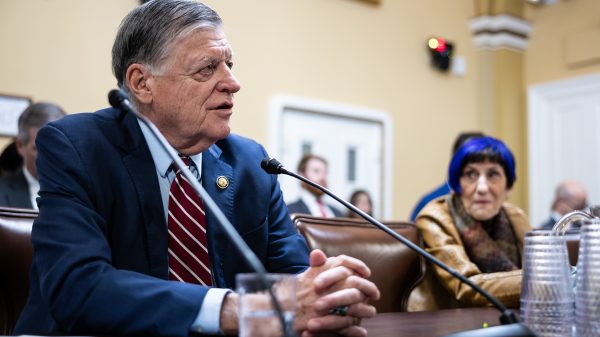
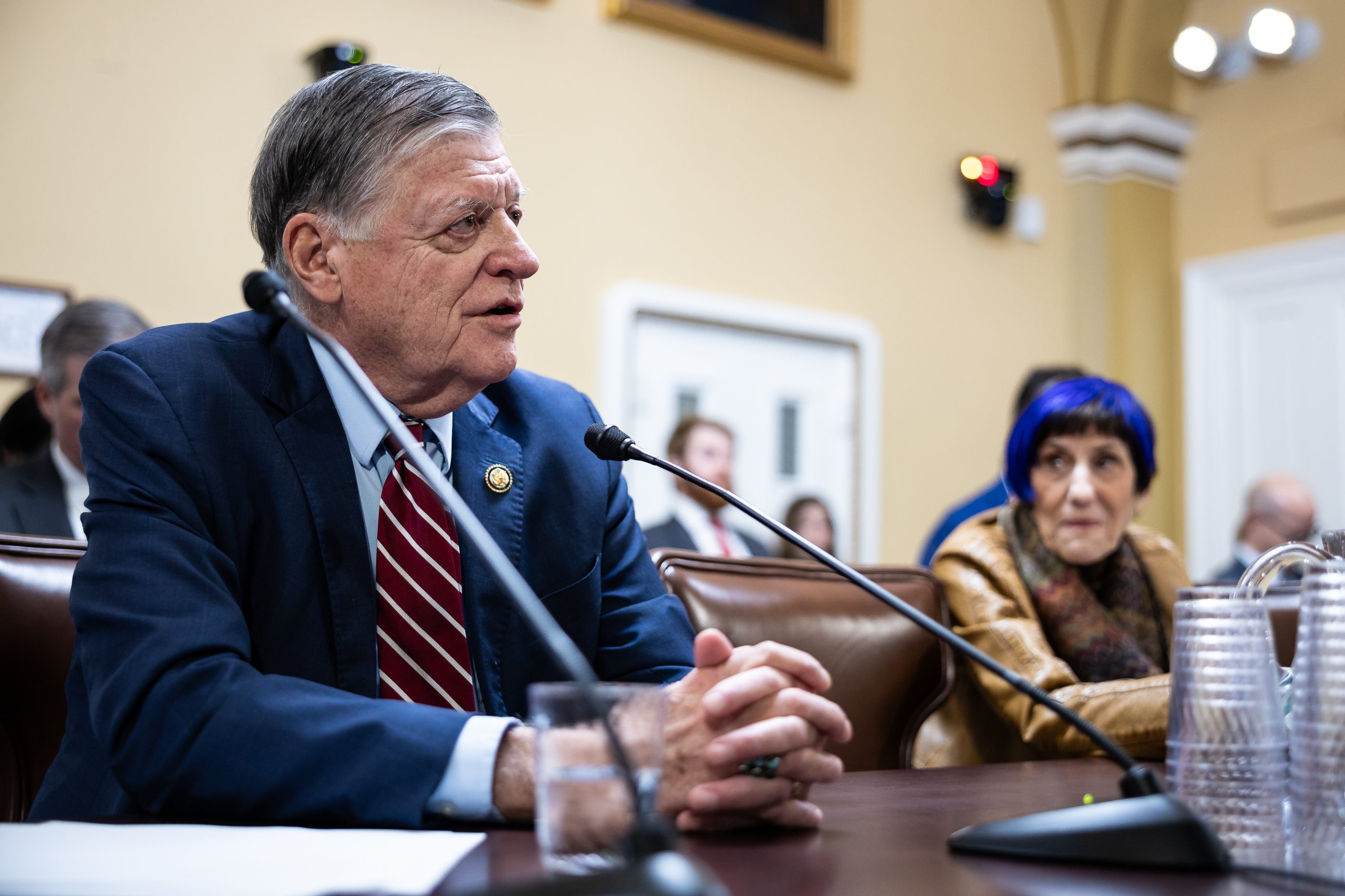
“It has some additional provisions for body cameras, for extra training, things like that, that we think will increase the professionalism, but it’s a good, solid bill,” House Appropriations Chair Tom Cole (R-Okla.) said Wednesday.
The final compromise would keep ICE funded at $10 billion for the fiscal year and would reduce the agency’s budget for enforcement and removal efforts. It would require DHS to use $20 million to outfit immigration enforcement agents with body cameras, direct the department to give officers more training on defusing conflict while interacting with the public and provide a separate $20 million for independent oversight of DHS detention facilities.
The House voted separately on the three-bill measure to fund the Pentagon and other departments through the end of September. Under a procedural measure approved earlier Thursday, those bills will be bundled together with the DHS measure and a previously approved two-bill package before being sent to the Senate.
Lawmakers voted down two amendments from conservatives before final passage. The chamber voted 291-136 to reject a proposal from Rep. Ralph Norman (R-Ark.) to eliminate all earmarks in the Labor-HHS-Education portion of the bill.
It also rejected, in a 268-164 vote, a proposal to overturn a mandate that automakers equip new vehicles with technology that prevents drunk driving. The amendment from Reps. Thomas Massie (R-Ky.) and Scott Perry (R-Pa.) would scrap the mandate Congress enacted in 2021 for the Department of Transportation to create those regulations.
The package also includes a scaled back attempt at reining in drug middlemen known as pharmacy benefit managers and renewals for several major public health programs, along with $4.6 billion in funding for community health centers pushed for by Democrats.
The measure also includes the customary payment to the widows or heirs of lawmakers who have died in office, this time to Jill LaMalfa, widow of Doug LaMalfa (R-Calif.), who died earlier this month.
The Senate is expected to consider that six-bill package when the chamber returns from recess next week. While many Democratic senators are already announcing their opposition based on the ICE funding, others will be hard-pressed to reject spending on the Pentagon and key domestic agencies — many of which are being funded at levels well beyond what the Trump administration proposed.
Jennifer Scholtes contributed to this report.