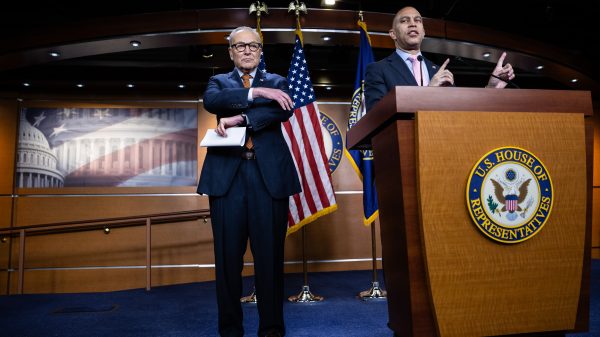






The House passed three government spending bills Thursday, inching Congress closer to funding federal operations ahead of the Jan. 30 deadline to avoid a shutdown.
The measures would fund the departments of Energy, Commerce, Interior and Justice, as well as water programs, the EPA and federal science initiatives through the end of the current fiscal year. The bipartisan vote comes as a relief to Speaker Mike Johnson, who had to mount a real-time whip operation on the floor Wednesday when conservatives threatened to tank the procedural rule paving the way for consideration of the funding legislation that was originally intended to be brought up in a single package.
A dozen GOP fiscal hawks were prepared to vote “no” on the rule unless leadership agreed to remove certain earmarks from the underlying package — and promised to revamp the earmarks process surrounding future spending bills.
To quell the rebellion, a plan was hatched to split up the package and accommodate two separate votes: one on the Commerce-Justice-Science bill, where discontent over certain earmarks couldn’t be resolved, and another on the Interior-Environment and Energy-Water bills coupled together. This maneuver allowed hard-liners to register their opposition to the Commerce-Justice-Science measure but still support the others.
The House ultimately voted 375-47 on Commerce-Justice-Science, with three dozen Republicans opposing, as compared to the just three Republicans who opposed the Interior-EPA and Energy-Water measures on a 419-6 vote.
Members of both parties also agreed to nix one particularly controversial, $1 million earmark sought by Rep. Ilhan Omar (D-Minn.) for a program in her district.
A third vote Thursday, 397-28, was on final passage and to approve sending the three measures over to the Senate reconstituted into a package. Majority Leader John Thune is eying consideration of this bundle as soon as next week.
“Going forward, we’re going to be allowed a little more access to the bills and the ability to have an impact on them in the future — this next tranche,” Rep. Andy Harris, a senior appropriator and House Freedom Caucus chair, told reporters.
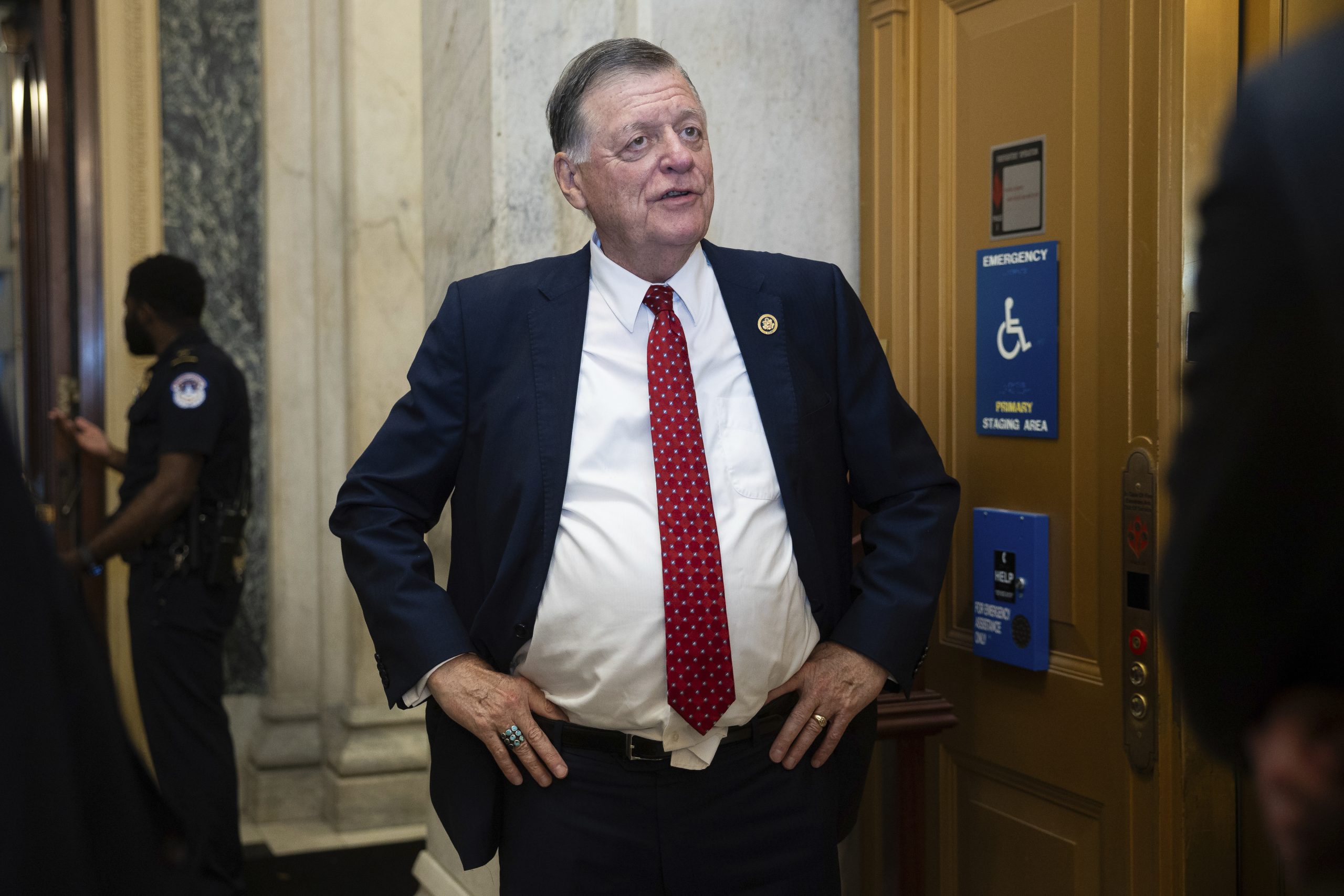
But House Appropriations Chair Tom Cole (R-Okla.) defended the bills against the lamentations of conservatives.
“These bills are the product of bipartisan, bicameral consensus and are grounded in a member-driven process,” Cole said in a floor speech Thursday. “It wasn’t meant to be easy. In fact, difficulty is what separates serious legislating from political convenience.”
Appropriators are already working on the next spending package they hope to move in advance of the month-end funding cliff. Legislative text could come this weekend, Cole told reporters Wednesday ahead of a meeting of chairs for the Homeland Security, State-Foreign Operations and Financial Services appropriations subcommittees.
“All the reports I’m getting are very good,” he added in a Wednesday interview. “We’re getting good cooperation from our Democratic friends as well. I mean, people are serious about trying to get this stuff done.”
But Cole and his colleagues have their work cut out for them in passing the rest of the full-year funding bills for fiscal 2026. There are six measures Congress has not yet advanced, and they include some of the diciest of the bunch — among them, Defense and Labor-HHS-Education, which make up nearly 70 percent of all federal discretionary spending.
And the DHS portion of the next funding package has likely gotten even more unwieldy following this week’s shooting of a U.S. citizen in Minneapolis by an Immigration and Customs Enforcement agent.
The House Republican in charge of that account, Rep. Mark Amodei of Nevada, acknowledged the events in Minnesota “will probably complicate the bill.”
The appropriations package advanced Thursday largely rejected the dramatic cuts requested by the White House, instead making more tailored spending reductions to energy and environment programs and those popular with Democrats.
The EPA would see a 4 percent, or $320 million, cut, instead of the more than $4 billion reduction President Donald Trump had sought. The National Park Service would face a moderate reduction from current funding levels, much less than the 37 percent cut the White House asked for.
One area set to get a boost are trade agencies, including an 18 percent increase for the U.S. Trade Representative’s Office and a 23 percent increase for the Commerce Department office responsible for designing and enforcing export controls used to target China and other countries.
Jennifer Scholtes contributed to this report.