






House Republicans pushed a three-bill spending package through a key procedural hurdle Wednesday afternoon after a hard-liner revolt threatened to derail the underlying bill.
Republicans stayed largely united on a test vote to advance the package with a 214-212 vote that would fund the Departments of Energy, Commerce, Interior and Justice, as well as water programs, the EPA and federal science initiatives through Sept. 30.
But it didn’t come easy. A dozen GOP lawmakers withheld their vote, prompting Speaker Mike Johnson and House Appropriations Committee Chair Tom Cole (R-Okla.) to launch a real-time whip operation on the House floor. More than a dozen lawmakers and staff huddled for an extended period after everyone else in the chamber had voted, pulling in House Majority Whip Tom Emmer, House Rules Committee Chair Virginia Foxx (R-Va.) and a bevy of staff.
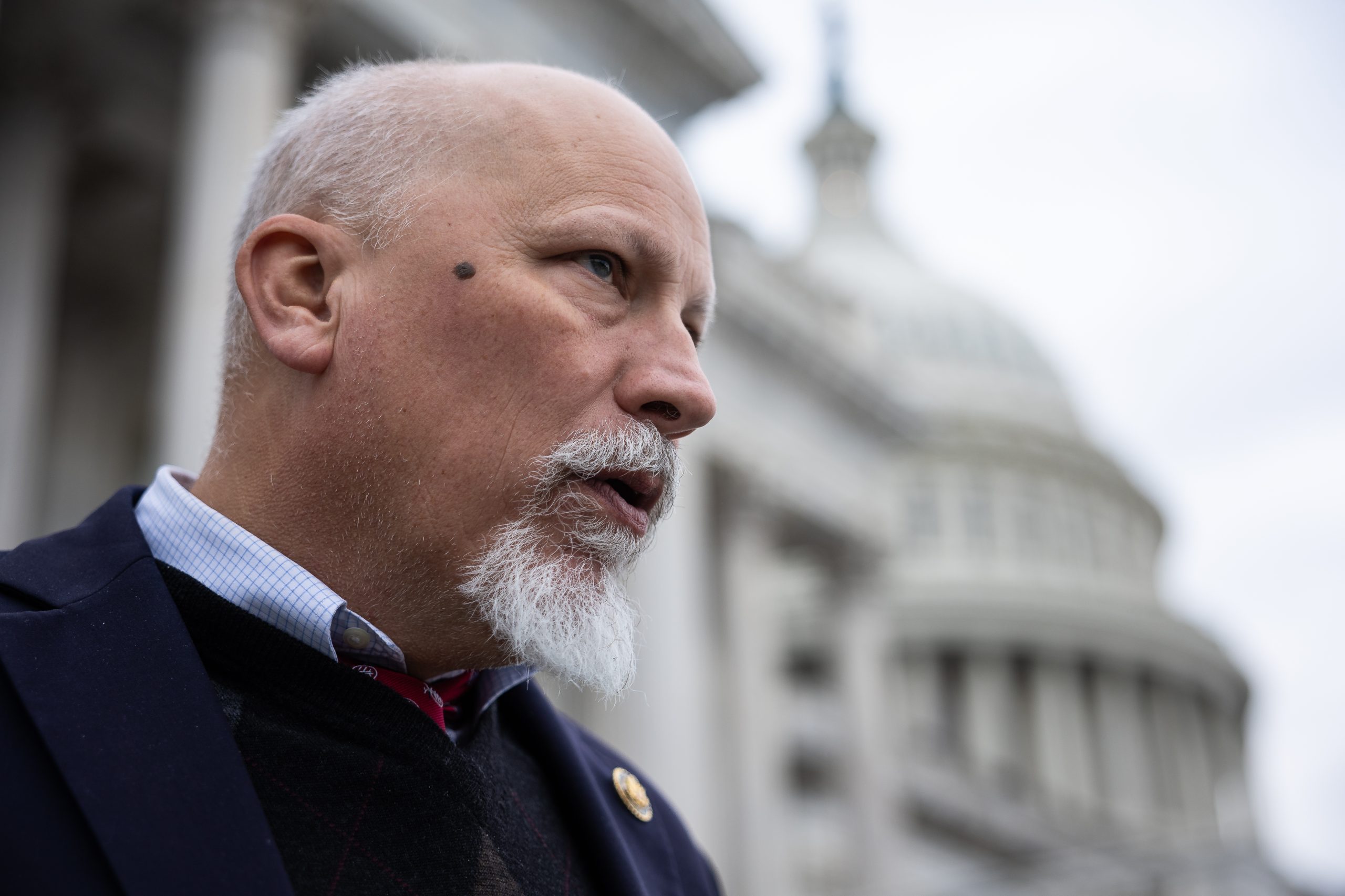
Reps. Chip Roy (R-Texas) and Scott Perry (R-Pa.) led the hard-liner charge to push their issues with leaders and the chamber’s top appropriator.
The planned procedural vote was first thrown into question after a contentious House Rules Committee hearing late Tuesday night where conservatives on the panel raised concerns about “outlandish” earmarks.
The stalemate forced the committee to recess overnight and reconvene Wednesday morning with the promise of a deal in hand. House Republican leaders struck a compromise to kill what Roy called “the most egregious” earmark for a community organization in the district of Rep. Ilhan Omar (D-Minn).
Leaders also agreed to pave the way for two separate final passage votes Thursday — one to advance the Commerce-Justice-Science bill and another to approve the Energy-Water and Interior portions.
This procedural gambit will allow Roy and other hard-liners to vote “no” on the CJS measure, where other earmarks continue to be irksome, while still voting “yes” on the other two appropriations bills.
If all three bills pass, they will be repackaged into a single bundle before being sent to the Senate for consideration as soon as next week.
Congress is rushing to approve more spending bills before the Jan. 30 deadline to avoid a shutdown.