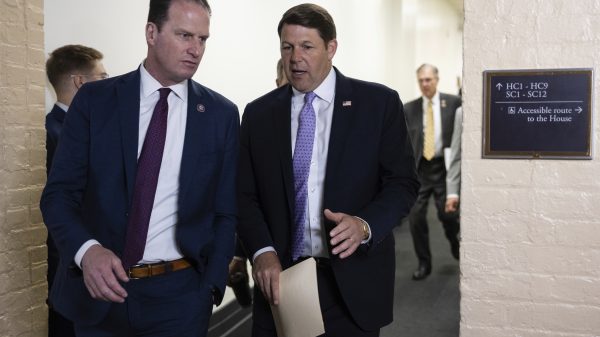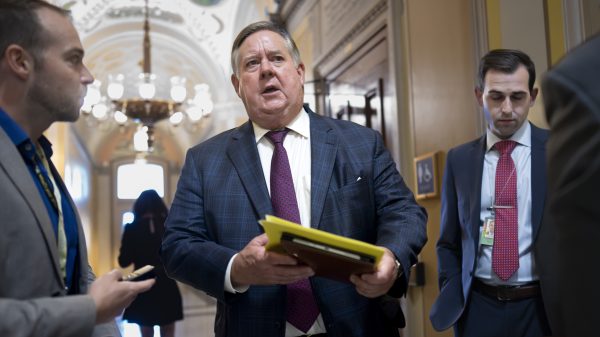








A conservative rebellion against earmarks is threatening to tank a key procedural vote Wednesday afternoon on a three-bill spending package as House GOP leaders scramble to avoid another intraparty meltdown on the chamber floor.
House leaders plan to strip out an earmark from Democratic Rep. Ilhan Omar, which could have major repercussions in a legislative body already plagued by partisan tensions and mistrust.
The community project funding at the center of hard-liners’ ire is $1 million for an organization in Minneapolis focused on “wraparound services” that include job training, addiction recovery and housing support. The organization describes itself as “youth-led East African recovery organization.”
The scrutiny over the earmark, which was also backed by Minnesota’s Senate delegation, comes as federal funding for childcare centers in Minnesota’s large Somali community is under fire by the Trump administration due to allegations of fraud. Some Republicans are claiming that this organization is also fraudulent.
“Earmarks are the currency of corruption, and they’re coming back in full force in these products,” Rep. Chip Roy (R-Texas) told reporters Wednesday morning about the spending package heading to the House floor later in the day. “And I just don’t support it.”
Following a GOP revolt inside the House Rules Committee late Tuesday night, House Republican leaders landed on a compromise to kill the earmark, according to four people granted anonymity to speak candidly about a private plan.
Leadership also agreed to split up the three-bill package that would fund Energy-Water, Interior-Environment and Commerce-Justice-Science when it comes to the floor for a vote.
That would give some Republicans the ability to vote against the CJS measure while backing the other two. The procedural gambit would then allow all three bills to be repackaged for the Senate to consider as one bundle.
House Appropriations Chair Tom Cole (R-Okla.), however, warned Wednesday the intense focus on one single earmark is a liability for carefully negotiated full-year funding bills, ahead of the Jan. 30 deadline to avoid a shutdown.
“I can’t afford to have a million dollar project jeopardize a $184 billion package of bills,” Cole told reporters. “If we have an individual project that can pose a political problem, I’ve had these in the past from our side before, where we had to tell a member, ‘look, there might be a way to do this, but our advice to you is to withdraw this.’”
Cole said the onus was on Democrats to convince Omar to abandon the request, or risk tanking the whole bipartisan spending package.
“It is under discussion and it will be resolved. That’s the way things go with these community projects. If there’s a difficulty, if there’s a problem, we try to work it out. Or it comes out,” Rep. Rosa DeLauro of Connecticut, the top Democratic appropriator in the House, said in an interview Wednesday afternoon.
The underlying language of the bill will not change, but the earmark is expected to be functionally neutered by making a change to report language that accompanies the bill text.
“It’s too late in the process,” for changes to funding levels or the bill text itself, Cole said.
Omar’s office did not immediately respond to a request for comment Wednesday.
Earmarks were banned under Republican leadership for more than a decade before being revived and rebranded by Democrats as “community project funding” in 2021. The new process has tighter restrictions for eligibility than the old one, which has calmed angst among most Republicans about frivolous hyperlocal projects.
Lawmakers from both parties request money for initiatives in their districts, but the vast number of earmark requests each appropriations season comes from House Republicans.
Roy and Freedom Caucus Chair Andy Harris (R-Md.) each stood up in Wednesday morning’s closed door House GOP Conference meeting to voice their frustration about the earmarks in the CJS funding bill and the lack of opportunity for rank-and-file members to offer amendments to the bill, according to four people in the room granted anonymity to speak candidly.
With these changes, and if Republicans have perfect attendance Wednesday, House GOP leaders – for now – believe they will have enough votes to narrowly clear the at-risk procedural hurdle on the floor late this afternoon.
This also would keep Republicans on track for final passage Thursday given strong support from Democrats, according to five people granted anonymity to share internal party dynamics.