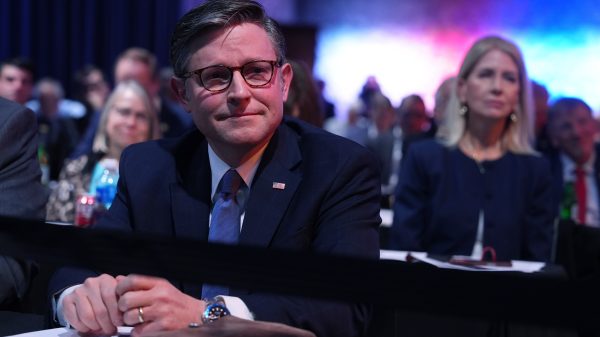






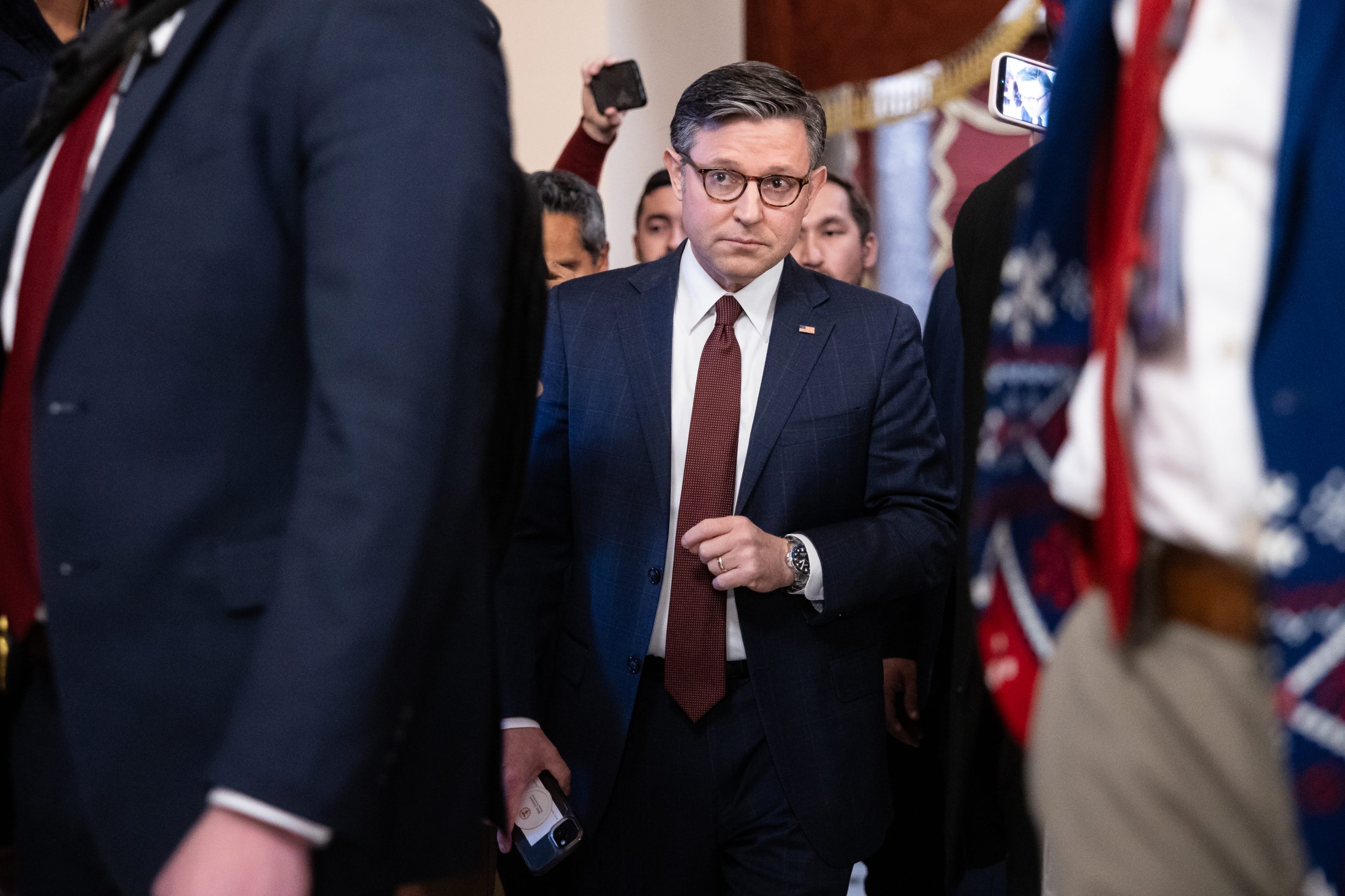
Congress is back for the new year. But Speaker Mike Johnson isn’t exactly getting a fresh start in 2026.
The House returns from the holiday recess to confront old issues that continue to bedevil Johnson — from politically perilous battle over health care and the ongoing release of the Jeffrey Epstein files to a messy intra-GOP fight over lawmakers’ stock trading and another looming government shutdown cliff.
The speaker is working to refocus Republicans, seeking to rally members around initiatives aimed at reducing housing prices and efforts to hammer Democrats over public-benefits fraud in Minnesota and other states. President Donald Trump’s decision to depose Venezuelan leader Nicolas Maduro by force has also given the GOP a new rallying point amid doubts about Trump’s plan to indefinitely “run” the South American country.
But Johnson will find it hard to escape internally divisive clashes as the GOP feels pressure to address the rising cost of living and otherwise firm up its standing ahead of the November midterms.
He will immediately confront a growing battle within his ranks this week over how to tackle high health care costs after Republicans allowed enhanced Obamacare tax credits to expire at the end of 2025.
Democrats plan to move as soon as Wednesday to force a floor vote on a three-year straight extension of the lapsed subsidies, according to three people granted anonymity to discuss internal planning. That comes after four House Republicans mounted a mini-mutiny against Johnson last month by signing a discharge petition backed by Minority Leader Hakeem Jeffries.
While this three-year extension could pass the House by Thursday, the bill is set to die in the Senate, where Majority Leader John Thune has indicated he has no plans to move it forward after a similar measure failed to garner the necessary 60 votes in a test vote last month. But a group of moderate senators continue to discuss a compromise proposal, and the rebellious House Republicans are hoping consensus legislation will eventually come back across the Capitol for final action.
The prospects for a bipartisan deal are dim, however, with Trump continuing to slam the Obamacare tax credits as wasteful while pushing Republicans to instead send money directly to taxpayers via health savings accounts. That’s in addition to the internal GOP battle on Capitol Hill over whether to pursue a party-line health care bill this year that could include sending checks to Americans to offset high health care costs.
Johnson is projecting confidence going into 2026, writing in a recent Wall Street Journal op-ed that Republicans have “laid the groundwork for an extraordinary new year — from containing the border crisis and stabilizing inflation to securing historic tax, trade and peace deals.”
“The best is yet to come,” he wrote, predicting that Americans would “experience the tangible results of common-sense governance” and reward the GOP at the ballot box.
But that isn’t likely to keep internal rivalries in check. On Venezuela, for instance, Johnson will have to grapple with a pro-intervention Florida delegation while other elements of the conference could be more skeptical of Trump’s threats of long-term military engagement.
Another headache from inside Johnson’s own conference is coming from hard-liners such as Reps. Chip Roy of Texas and Anna Paulina Luna of Florida, who are demanding a vote on legislation to ban congressional stock trading.
Johnson and House Administration Chair Bryan Steil (R-Wis.) are seeking to head off threats of a discharge petition that would force a vote on that proposal by drafting their own framework for cracking down on insider trading. They plan to move it out of Steil’s panel and onto the floor in the coming weeks.
But the GOP leadership-backed bill would, as POLITICO first reported, still allow lawmakers to hold stocks they already own — a concession that might pass muster with Roy and Luna but is stoking others’ ire. Democrats are already raising alarms over the plan they say falls short of a full ban on congressional stock trading.
An even more explosive issue — the Epstein files — threatens to continue dogging House GOP leaders as well, as the Justice Department is under increasing criticism across party lines for its slow and incomplete release of materials related to the late convicted sex offender.
While Congress required DOJ to make its Epstein case files fully public last month, department officials say millions of pages of records continue to be reviewed. And critics say the records that have been released have been subject to improper redactions and other irregularities.
The issue could come to a head in the coming weeks, with House Judiciary Republicans looking to schedule a routine oversight hearing with Attorney General Pam Bondi that is now expected to focus heavily on the administration’s handling of the Epstein case.
“They are blatantly ignoring the law,” Rep. Thomas Massie (R-Ky.), who helped lead the effort to release the files and sits on the Judiciary Committee, said in an interview.
He and Rep. Ro Khanna (D-Calif.), who co-sponsored the legislation compelling the release of the files, have said they are preparing to push for a rare “inherent contempt” vote against Bondi that could include fines and other sanctions for DOJ’s alleged noncompliance.
If there’s any encouraging news for Johnson heading into 2026, it’s on the appropriations front.
With only a handful of legislative days left before the Jan. 30 deadline to avoid a shutdown — and with many Republicans worried about the potential for another short-term punt — the top four House and Senate appropriators have been making quiet progress on a three-bill funding package as appetites fade for allowing the government to shutter yet again.
Talks around a full-fiscal-year “minibus” that would include the Interior, Energy-Water and Commerce-Justice-Science appropriations bills are close to being finalized, three other people granted anonymity to discuss internal deliberations said. GOP leaders are hoping to put the package on the House floor Thursday if a deal can be reached.
In the meantime, House GOP leaders are navigating internal politics around a major bipartisan housing package the Financial Services Committee approved last month. While it remains unclear whether the House and Senate can reconcile competing housing plans, Johnson is pushing forward after Trump’s top pollster told a closed-door briefing of House Republicans last month they should focus more on housing affordability issues ahead of the midterms.
This week, House GOP leaders are planning to hold votes on a bill from Rep. Erin Houchin (R-Ind.) that would cut red tape and relax energy efficiency standards for manufactured housing as well as a measure from Rep. Russell Fry (R-S.C.) that would codify Trump’s effort to roll back a regulation instituted under former President Joe Biden limiting water flow for shower nozzles.
But even Republican leaders’ unity-building proposals — such as highlighting the fraud convictions in Minnesota — could end up sparking fights.
A growing number of conservatives want Trump to reinstate Elon Musk in his prior role as efficiency czar to probe reports of Medicaid fraud and other related projects. But other Republicans, especially key moderates, are cool to the idea.
“We have fraud experts in the government that can do this,” Rep. Don Bacon (R-Neb.) said in an interview. “They should be able to do their jobs.”